
LovedPack Originals / Research
The Dog Beauty Index 2026
Dog care learned beauty's codes. It hasn't yet learned its rhythm.
An analysis of 100 premium dog-care products across 30 brands found a category that has already adopted many of beauty’s products, formats and systems, while care remains heavily concentrated around bath day and comparatively few products tell consumers when care should return. The next frontier may not be more product. It may be time.
Dogs moved closer. Into our homes first, then onto the furniture, into the car, the bed, the family photograph, the holiday, the hotel. Eventually into the texture of everyday life.
Commerce followed. Dog food became more considered and collars became objects of design. Products once destined for the cupboard started appearing on bathroom counters and bedside tables.
Grooming changed too. The bottles got quieter, the photography got more editorial, and the ingredient stories became more sophisticated. Words familiar from skincare and haircare, things like barrier, nourish, glow, serum and ritual, began showing up in a category that had been defined largely by shampoo. Beauty companies started making products for dogs, and dog-care companies started looking increasingly like beauty companies.
Dog care has already learned how beauty looks. The more interesting question is whether the category is beginning to adopt the behaviors that made beauty what it is.
But beauty has never been only an aesthetic.
Beauty is behavior.
Beauty teaches us that different products perform different jobs, gives those jobs an order, and eventually gives them a rhythm. Cleanser at night, SPF in the morning. Conditioner after shampoo, dry shampoo between washes, a treatment once a week. Different formulas, different occasions, and a pattern of care everyone understands without being told.
That distinction led us to the question behind the first Dog Beauty Index:
If we ignore the packaging for a moment, how much does premium dog care actually behave like beauty?
LovedPack analyzed 100 premium topical dog-care products across 30 brands. LovedPack products were deliberately excluded from the sample, because we wanted to understand the category before trying to explain our place inside it.
What we found complicated our original thesis. That was the point.
Finding 01
71 / 100
The category still begins with the bath.
Of the 100 products analyzed, 71 had an explicit role within the bath-day sequence, from cleansing and conditioning to pre-wash and clearly documented post-wash steps.
There's considerable sophistication inside those bottles. The contemporary premium market includes thoughtful surfactant systems, conditioning technologies, skin-focused ingredients, botanical actives and formulations that wouldn't look conceptually out of place in serious human haircare.
Nearly three quarters of the sample still touch the bath.
That number is worth sitting with on its own, but the behavior surrounding it is the more useful story. The dog needs washing, the water turns on, the product appears, the bath ends. Bath day remains the gravitational center of the category, the most common care moment in the sample, even as the category around it has become more sophisticated.
The packaging may have left the grooming aisle before the behavior did.
The dog has an entire life between baths.
A dog may be bathed every few weeks. The dog does not live every few weeks.
They walk outside, run through grass, lie on floors, ride in cars, climb onto couches, get caught in rain and sleep in beds. They're touched and held every day. Sometimes they come home dusty, or damp, or oily, or carrying evidence of an adventure nobody witnessed.
None of that is the space between life with a dog. This is life with a dog.
And yet much of the architecture of dog care stays concentrated around the comparatively brief moment when the dog enters the bath. That's where another part of the category starts to appear.
Finding 02
22 / 100
Between-bath care is becoming visible. It is still the minority.
Just over one in five of the 100 products analyzed, 22 in total, had an explicit Between-Bath role under the Index methodology: dry shampoos, waterless cleansers, no-rinse powders, cleansing sprays and wipes. Products designed specifically for the period between baths, washes or professional grooms.
The important distinction isn't whether the product happens to be a powder or a mist. It's the question the product is trying to answer. Traditional grooming asks how do I wash my dog. Between-bath care asks how do I care for my dog when I am not washing them.
The first organizes care around an event. The second starts to organize it around life.
Human beauty grew by getting extraordinarily good at recognizing those in-between spaces. Haircare didn't end with shampoo, skincare didn't end with cleanser, a wash never made a leave-in redundant, and a shower never eliminated body lotion. The expansion wasn't simply a proliferation of bottles. Different occasions acquired different meanings.
That distinction matters, because dog beauty doesn't need to become an excuse for giving a dog an unnecessary twelve-step routine. The moments already exist. The more interesting question is which of them genuinely deserve a product.
Bath day touches 71 products in the sample. Explicit between-bath care touches 22. The measures overlap rather than compete, but the imbalance still reveals where the category’s behavioral architecture is concentrated.
Finding 03
41 / 100
The product has already escaped the bathtub.
There's an apparent contradiction in the data. Only 22 products were explicitly positioned around care between baths, but 41 of the 100 products analyzed were Leave-On or No-Rinse formats, close to twice as many.
These aren't equivalent measures. A leave-on conditioner isn't necessarily a between-bath cleanser, a fragrance has a different job from a dry shampoo, and a finishing spray isn't the same thing as targeted skin care. That's precisely why the gap is interesting.
The formats are further developed than the guidance around when to use them.
The product has escaped the rinse. The language around when to use it is less settled.
As assortments get more sophisticated, the consumer runs into a different set of questions. When do I use this? How often? What job does it own, what comes before it, what comes after? Is it maintenance, treatment, refresh or finish? Does it replace something, or does it belong to an entirely different moment?
Twenty-one of the 100 products in the sample carry an explicit finishing or styling role of their own, real evidence that the category has already diversified well past cleansing into appearance, detangling and polish. Leave-On is a format. Between-Bath is a care moment. Finish/Style is a job. A single product can hold one, two or all three without ever telling the consumer when to reach for it.
A category can have increasingly sophisticated products while leaving the customer responsible for organizing all of them in time. That's the point where product innovation and category maturity start to separate.
The missing instruction may be when.
Products can become more sophisticated without becoming easier to organize. A consumer may understand exactly what a spray does and still not know when it belongs.
Under the Index's stricter definitions, only 10 of the 100 products analyzed were explicitly positioned around Daily care, and only 10 carried a clear recurring-frequency instruction, something like weekly, every few weeks or a specified number of uses over time.
These aren't necessarily the same ten products. Daily Role measures whether everyday care is part of a product's job. Explicit Frequency measures whether the brand actually tells the consumer when use should recur. A product can claim one without the other, or neither.
In both cases, the number was small, and the bar to clear it was deliberately high. A label that says a product is safe for daily use, or that it can be reached for as needed, describes what the product can tolerate. It doesn't tell anyone when the product is supposed to come back into their life.
The category is much clearer about what a product does than about when it belongs.
Finding 04
12 / 30 vs. 5 / 30
Systems are already present. Time architecture is less developed.
Then the research changed our mind.
We started this project with an assumption. We thought the whitespace in premium dog care might simply be the system: more elevated products were appearing, but perhaps they stayed largely disconnected. Shampoo here, spray there, fragrance somewhere else.
It was a neat thesis. It was also wrong.
At the brand level, 12 of the 30 brands analyzed, or 40%, already had what our methodology classified as an explicit system or routine. Systems are not rare.
That finding matters beyond the number itself. Research becomes a lot less useful when every conclusion conveniently validates what the company publishing it already believed. So the data forced a better question. If the system already exists, what comes after the system?
Assortment. System. Cadence.
An assortment organizes choice. There's shampoo, conditioner, spray, fragrance. Choose what you need. A system organizes sequence. First this, then this, then this. But cadence organizes something different: time. This today, this next week, this next month.
A system tells you what comes next. Cadence tells you when care comes back.
None of that means more products are better. Two-in-one and three-in-one formulas can make bath day faster and simpler, and when several jobs genuinely get done well in one product, that simplicity has real value. But making bath day more efficient doesn't organize the rest of a dog's life. Bath day is one care occasion. The days between baths create others, and everyday life creates others still.
The goal isn't more steps. It's better-defined care: the right care, for the right moment, at the right frequency. The point isn't a bigger routine. It's a better-cared-for dog.
Here, the market looked different. Under the stricter definition used for the Index, only 5 of the 30 brands analyzed demonstrated strong recurring cadence across distinct product roles.
That's a narrower behavior, and perhaps a more meaningful one, because repetition is the point where instruction starts becoming habit.
Forty percent of brands had sequence. Only 16.7 percent had strong time architecture.
That distinction became the most important finding in the Index. The market isn't waiting for someone to invent the dog-care system. Systems already exist. What remains less developed is the layer after sequence: recurrence.
Product-level evidence tells the same story from another angle. Only 10 of the 100 sampled products carried an explicit recurring-frequency instruction, the same figure introduced earlier in the sample. A system tells you what comes next. Cadence tells you when care comes back. The category has made considerably more progress on sequence than on recurrence.
Beauty is built on time.
Mature beauty categories have taught us their behavior so successfully that we barely notice the teaching anymore. We understand intuitively that shampoo and conditioner belong together and that dry shampoo belongs somewhere else. Some products are daily, some weekly, some occasional. The consumer isn't forced to reconstruct the logic of the category every morning in front of the bathroom cabinet, because the culture already knows.
That may be one of the thresholds dog beauty has yet to fully cross. And the opportunity is easy to misunderstand. It isn't necessarily more products. It may be more clarity.
Those are very different propositions. Category development shouldn't be measured by how many additional products can be sold to somebody who loves their dog. Love is not a vulnerability to exploit.
The more credible opportunity is to recognize the care moments that already exist and make the right response to each one clearer. Sophistication should reduce confusion, not create it.
Finding 05
12 / 100
Beauty’s codes have traveled further into dog care than beauty retail distribution has.
Dog care increasingly looks at home inside the beauty conversation. Very little of our sample, though, is actually sold through the independent retail environments that help define human beauty, fashion and lifestyle culture.
The Index deliberately applies a strict rule here. A human beauty company making a dog product doesn't automatically qualify, and neither does a dog product sold through its own brand website. The specific sampled dog SKU needed a current qualifying listing through an independent human beauty, fashion, department, luxury or lifestyle retailer.
Under that definition, 12 of the 100 sampled products had a current qualifying listing through independent human beauty, fashion, department, luxury or lifestyle retail. Those 12 products came from seven brands.
This may be the category's most visible contradiction. Dog care has already absorbed much of beauty's visual language: its packaging codes, its ingredient vocabulary, its fragrance language, its creative direction, its price signaling and its cultural aspirations. Distribution remains much more limited.
The cultural codes are much further along than the distribution.
Beauty retail is part of the picture too.
The twelve qualifying products shouldn't be read as evidence that beauty retailers accept only isolated dog shampoos. That conclusion would already be too simple.
Among the seven brands represented in qualifying beauty/lifestyle retail, two were classified as explicit system/routine brands, and one demonstrated strong recurring cross-product cadence.
This matters because it prevents another neat but incorrect story. Beauty retail isn't simply importing isolated pet products; more sophisticated care architectures appear there as well.
The Index can't tell us what beauty retailers will choose next. It wasn't designed to. It can tell us what has crossed over so far, and what still looks unusual once it gets there. That's what a category in transition looks like: not empty, not settled.
Dog beauty cannot simply mean making dogs more human.
This is where the category needs discipline. Dogs aren't small humans. Their skin, coats, sensitivities and behaviors are all different, and so is their relationship to fragrance, topical products, licking, bathing and environmental exposure.
The weakest version of dog beauty would take the rituals of human beauty and reproduce them indiscriminately for another species. Human formula, smaller bottle, add dog. That isn't progress.
What human beauty can offer is something more useful. Not its biology. Its logic of care.
Different jobs deserve different formulations. Form should follow function. Frequency matters, sensory pleasure matters, and objects can be both effective and beautiful. A sophisticated routine should become easier to understand, not harder.
The dog has to remain the biological starting point, always. Beauty is the discipline applied around that truth.
The dog needs the care. The human experiences the beauty.
A dog's needs may include cleansing, conditioning, skin and coat care, freshness and appropriate maintenance between baths. The human experiences another layer at the same time: touch, softness, scent, the pleasure of a beautifully made object, a ritual, and the quiet satisfaction of caring well for something they love.
Those experiences don't have to compete with function. Beauty understood that a long time ago. Perhaps dog care is beginning to understand it now.
So, has dog care become beauty?
Not entirely. That's what makes this moment worth studying.
Among the 100 premium dog-care products analyzed, 71 had an explicit Bath-Day role, 22 had an explicit Between-Bath role, 41 were Leave-On or No-Rinse formats, 10 were explicitly positioned for Daily care, 21 had a Finish/Style role and 10 carried an explicit recurring-frequency instruction.
At the brand level, 12 of 30 had an explicit system or routine and 5 of 30 demonstrated strong recurring cadence across distinct product roles. Twelve of 100 sampled products had a current qualifying listing through independent human beauty, fashion, department, luxury or lifestyle retail.
These numbers don't describe a category waiting to be invented. Dog beauty is already happening.
The sample contains sophisticated formulations, formats that extend beyond the bath, existing systems, emerging beauty-retail presence and a visual language increasingly familiar from human beauty. What remains less complete is the architecture of time. When does care happen? Which job belongs to which moment? How often does that moment return? And how should all of it fit into the life the dog actually lives?
Grooming is an event. Dog beauty may become a continuum of care.
The distinction doesn't require grooming to disappear. The bath remains, shampoo remains, and professional grooming remains essential for many dogs. Dog beauty simply widens the frame.
From the bath to the walk. The couch, the car, the rain, the bed. The days between appointments and the weeks between washes. The ordinary Tuesday when nothing particularly dramatic happened and the dog simply lived beside us.
Because something larger changed before the product category did. Dogs moved closer. Into our homes, our furniture, our travel, our photographs, our routines, our lives. The relationship became daily, and the care surrounding that relationship is beginning to follow.
Not necessarily bathing. Care. There is a difference.
What happens next?
Emerging categories often pass through an awkward period when the old definition has become too small and the new one still sounds slightly excessive. Dog care appears to be somewhere inside that period. Grooming still accurately describes a large part of the market; it just no longer describes everything.
Dog beauty doesn't need more products simply for the sake of having more products. The sample already contains cleansers, conditioners, leave-ins, powders, oils, wipes, fragrances, treatments and finishing products. It contains systems, too. The more interesting frontier is teaching those products to live in time.
Which is why the most interesting question facing dog beauty may no longer be how many products this category will create. It may be how the category teaches people when care belongs.
The promise isn't a larger shelf. It's better-defined care, the kind that makes it easier to understand what a dog needs, when they need it, and when they don't need anything at all.
Because the ultimate sign of maturity won't be an overflowing shelf. It will be the opposite.
The consumer will know exactly what belongs where.
And eventually, when.
The Index at a glance
| Finding | 2026 sample |
|---|---|
| Bath-Day | 71 / 100 |
| Explicit Between-Bath | 22 / 100 |
| Leave-On / No-Rinse | 41 / 100 |
| Daily Role | 10 / 100 |
| Finish / Style | 21 / 100 |
| Explicit recurring frequency | 10 / 100 |
| Brands with explicit System / Routine | 12 / 30 |
| Brands with strong recurring cadence | 5 / 30 |
| Qualifying Human Beauty / Lifestyle Retail | 12 / 100 |
| Brands represented in qualifying retail | 7 / 30 |
Explore the research
Download the full dataset
The complete 100-product universe with product classifications, source links, brand-level validation and methodology.
Download the dataset (XLSX) Excel workbook, approximately 35 KB. Retail listings and pricing are point-in-time observations from August 2026.Methodology and research notes
The Dog Beauty Index 2026 examines a purposeful sample of 100 premium topical dog-care products across 30 brands reasonably accessible to consumers in the United States. It was built to examine the evolving boundary between premium grooming and the emerging dog beauty category.
Market
The primary market is the United States. International brands were included where their products were reasonably accessible to U.S. consumers.
Price threshold
Individual products were required to carry a regular MSRP or list price of at least $20. Bundles and sets were excluded as individual product observations.
Product scope
Included formats cover topical grooming and beauty products such as shampoos, conditioners, masks, dry and waterless cleansers, leave-in products, coat sprays and mists, oils, fragrances, finishing products, qualifying wipes and relevant topical skin-and-coat products.
Supplements, dental products, flea-and-tick products, medicated treatments, ear-only care, grooming tools and accessories were excluded.
Sampling
The Index is not an exhaustive census. Brands were generally limited to approximately five sampled products so that very large professional ranges couldn't disproportionately influence the universe.
Where a brand offered more qualifying products than its sample allocation, materially distinct product roles and care moments were prioritized over near-duplicate bath variants. The purpose of that rule was to reduce selection bias toward large shampoo assortments, not to manufacture a preferred category result.
Variants
Scent and color variations of substantially the same base product weren't treated as separate observations unless materially different.
Care-moment classifications
Bath-Day, Between-Bath, Daily Role and Finish/Style are non-exhaustive and non-mutually-exclusive care-moment attributes, so products can qualify for more than one care moment. Targeted or unscheduled maintenance products may also sit outside those four classifications while still being captured through format measures such as Leave-On / No-Rinse.
Bath-Day
A product was classified as Bath-Day when current evidence explicitly placed it within the bath sequence, including pre-wash, cleansing, conditioning, rinse/final-rinse or clearly documented post-wash steps. Products did not need to be rinse-off to qualify.
Between-Bath
A product qualified when current product or brand evidence explicitly positioned it between baths, washes or grooms, or where it was clearly a dry, waterless or no-rinse cleansing or refreshing product intended to maintain cleanliness without a full bath.
Leave-On / No-Rinse
This measure captures product format and is broader than Between-Bath. A leave-on product may provide conditioning, finishing, fragrance, targeted skin care or another function without being explicitly positioned as between-bath cleansing.
Daily Role
Daily Role required explicit positioning around daily or everyday care. Statements that a product was merely safe, suitable or gentle enough for daily use did not qualify by themselves.
Explicit Frequency
Explicit recurring frequency required a clear recurring recommendation or instruction such as daily, weekly, every two to four weeks, monthly or a specified number of uses per week or month. Capability language such as "can be used daily," "suitable for daily use," or generic "as needed" instructions did not qualify by themselves.
Finish/Style
Finish/Style required explicit evidence of a finishing, styling, polishing, show-coat or dedicated appearance-enhancing role. Incidental claims such as leaving the coat shiny or soft did not automatically qualify.
Systems and routines
System/routine status was assessed separately at the brand level using current brand or authorized evidence. It's distinct from whether every sampled SKU is individually described as part of a system.
Cadence
Strong recurring cadence required multiple distinct care roles organized across identifiable recurring time intervals, or explicit recurring care roles connected to specific product roles. It is separate from whether a brand simply calls its assortment a system. Because cadence involves more interpretive judgment than basic format classification, it's presented as an indicator of category development rather than a statistically representative market measure.
Human Beauty / Lifestyle Retail
The specific sampled dog SKU needed a current qualifying listing through an independent human beauty, fashion, department/luxury or lifestyle retailer. Brand-owned retail alone didn't qualify. Confirmed physical prestige placements may be discussed editorially but weren't added to the headline SKU count where the specific stocked SKU couldn't be independently verified.
LovedPack
LovedPack products were intentionally excluded from the primary 100-product dataset. The category was analyzed independently of LovedPack's assortment.
Research period
The product universe was researched and audited in August 2026, with final publication verification completed prior to release. Retail listings, stock status, availability and pricing are point-in-time observations and should be understood accordingly.
Limitations
The Dog Beauty Index is a purposeful category analysis, not a statistically representative census of every dog-care product sold in the United States. The findings therefore describe the sample analyzed.
The inaugural Index doesn't publish blended average-price or price-per-volume conclusions, because product sizes and currencies weren't standardized sufficiently across the entire universe for that analysis.
Explore the brands analyzed30 brands · 100 products
4-Legger3 products
MOISTURIZE Organic Lemongrass & Hemp Dog Shampoo
REVITALIZE Organic Neem + Sweet Orange Dog Shampoo
RESTORE Organic Apple Cider Vinegar Conditioning Rinse for Dogs
Aesop1 product
Animal
Artemis1 product
3-in-1 Powder-to-Lather Dog Wash
Artero5 products
Speed Dry Shampoo
Protein Vital Conditioner
Mix Spray Conditioner
Matt-X Conditioner Spray
Conditioner Ikon Vital
Biche2 products
Cloud Cleanser
Après Oil
Botaniqa5 products
Detangling Coat Milk
Luminous Sparkling Mist
Deep Conditioning Coat Oil
Volume Up Shampoo
Harsh & Shiny Coat Shampoo
Chris Christensen5 products
SmartWash50 Hypoallergenic Blend Shampoo
Day to Day Shampoo
Ice on Ice Detangling Shampoo
Ice on Ice Detangling Conditioner
Ice on Ice Detangling and Finishing Spray
Dandylion3 products
Soothe Gentle Cleansing Dog Shampoo
Nourish Gentle Hydrating Dog Conditioner
Fresh Coat Daily Cleansing Spray
DedCool2 products
Pet Shampoo 01 “Taunt”
Pet Fragrance 01 “Taunt”
DOG by Dr Lisa5 products
DOG Wash
DOG Leave in Conditioner Spray
DOG Sensitive Wash
DOG Sensitive Leave in Conditioner
DOG Coat Masque
Dog Fashion Spa5 products
Primo Clarifying Shampoo
Primo Conditioner
Arrivederci De-Shedding Conditioner
Dolce Day-to-day Shampoo
Rilassante Leave-in Lotion 4oz
Doglyness4 products
Immortelle Rejuvenating Shampoo
Immortelle Rejuvenating Conditioner
Oats Calming Shampoo
Spray All Day
Dolce&Gabbana1 product
Fefé Fragrance Mist for Dogs
Fur & Essence1 product
Pure Paw — Fragrance Free No-Rinse Dog Shampoo
Hydra5 products
Moist Shampoo
Moist Conditioner
Ultra Detangle & Dematting Finishing Spray
Soft Touch Moisturizing Spray
Forever VIP Cologne
Hyponic5 products
SHOW DOGS Cypress Water Shampoo — Whitening
SHOW DOGS Cypress Water Shampoo — Deep Cleanse
SHOW DOGS Makeover Dry Shampoo
SHOW DOGS Milk Protein Conditioner
Grooming Artist Detangling Mist
iGroom5 products
All-In-One Pet Shampoo + Conditioner
Argan + Vitamin E Moisturizing Pet Shampoo
Clarifying Magic Powder for Dogs
Magic Detangler Pet Conditioning Spray
Boost It Texture Aerosol Dog Hairspray
Iv San Bernard4 products
CAVIAR (green) SHAMPOO
CAVIAR (green) CONDITIONER MASK
MINERAL H SHAMPOO
MINERAL RED DERMA COMPLEX SHAMPOO
Kiehl’s3 products
Cuddly-Coat Grooming Shampoo
Cuddly-Coat Grooming Rinse
Cuddly-Coat Cleansing Spritz
Les Poochs4 products
Dog Detangler & Finishing Spray
VIP Clarifying Shampoo
VIP Creme Rinse Conditioner
Pooch VIP
Lil Luv Dog5 products
liquid wash
leave-in conditioning mist
dry shampoo
dry shampoo on-the-go
the daily wipe
LolaVie1 product
Puppy Love Dog Shampoo
MALIN+GOETZ1 product
dog shampoo
Nature’s Specialties4 products
Plum Silky Shampoo
Plum Silky Conditioner
Quicker Slicker Ready To Use
Hypo Aloe Genic Shampoo
OUAI1 product
Fur Bébé Pet Shampoo
PRIDE+GROOM5 products
THE SENSITIVE ONE
THE FINAL COAT
THE MANE TAME
THE LEAVE IN
PROUD Signature Scent
Rowan4 products
THE FUR WASH
THE HAIR WASH
THE COAT REFRESH
THE DRY SHAMPOO
STUCK SOAP2 products
Dog Leave-in Conditioning Spray 200ml - Blush Garden
Silent Grove Dog Shampoo - 500 ml
Tauro Pro Line5 products
Magic-Plex Dog & Cat Shampoo
Magic-Plex Dog & Cat Conditioner
5in1 Dog Conditioner
Ultra Sensitive Conditioner
Fur Growth Conditioner
Welltayl3 products
Coat Wash + Conditioner
Skin + Coat Spray
Skin Barrier Stick
Why LovedPack studied dog beauty
We started LovedPack with a product question. It became a category question.
If dogs had moved into the center of everyday life, why did so much of their care still seem to revolve around the occasional bath? We thought the answer might simply be that dog care lacked systems. So we looked, and the research proved us wrong. Systems already exist.
That discovery made the question more interesting. What appears less developed is time: different kinds of care clearly connected to different recurring moments.
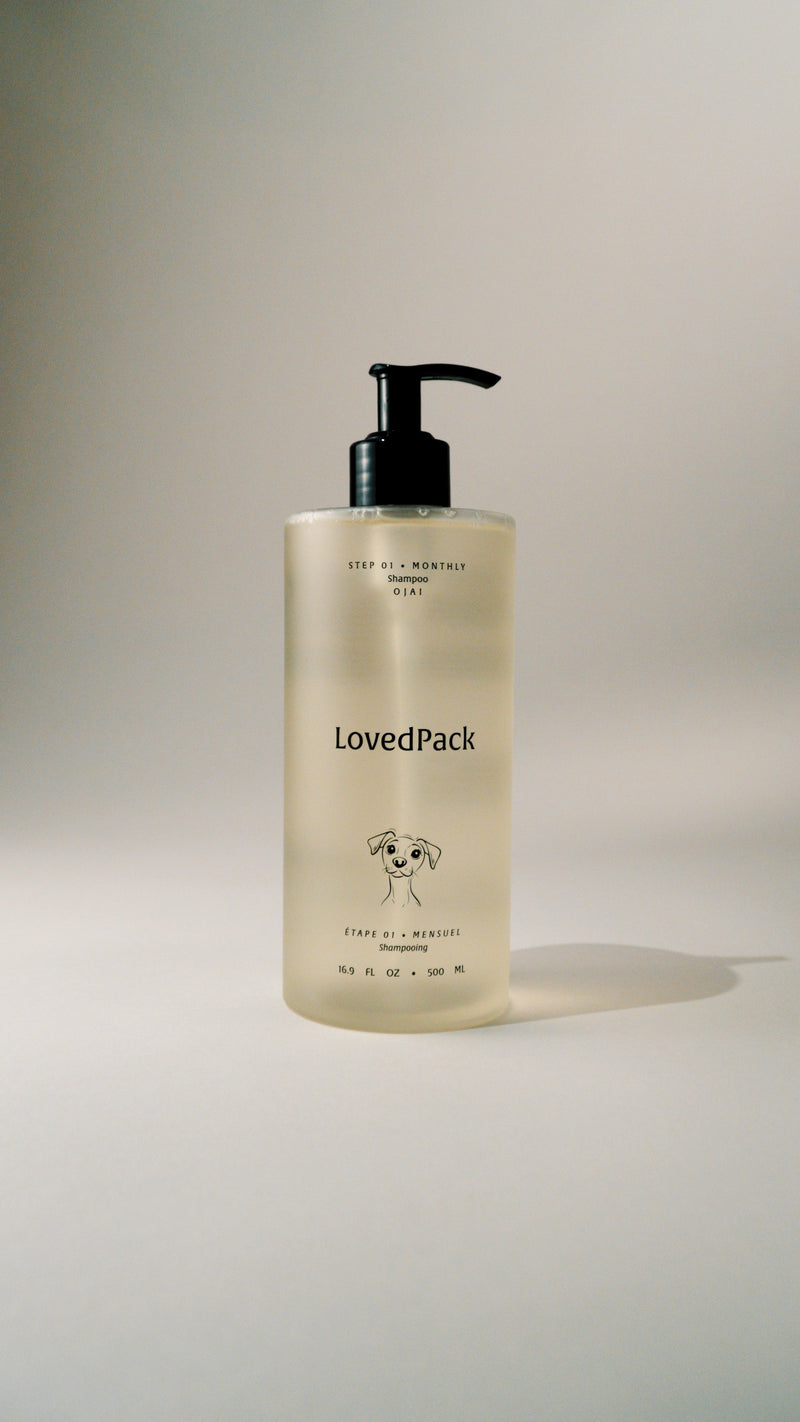
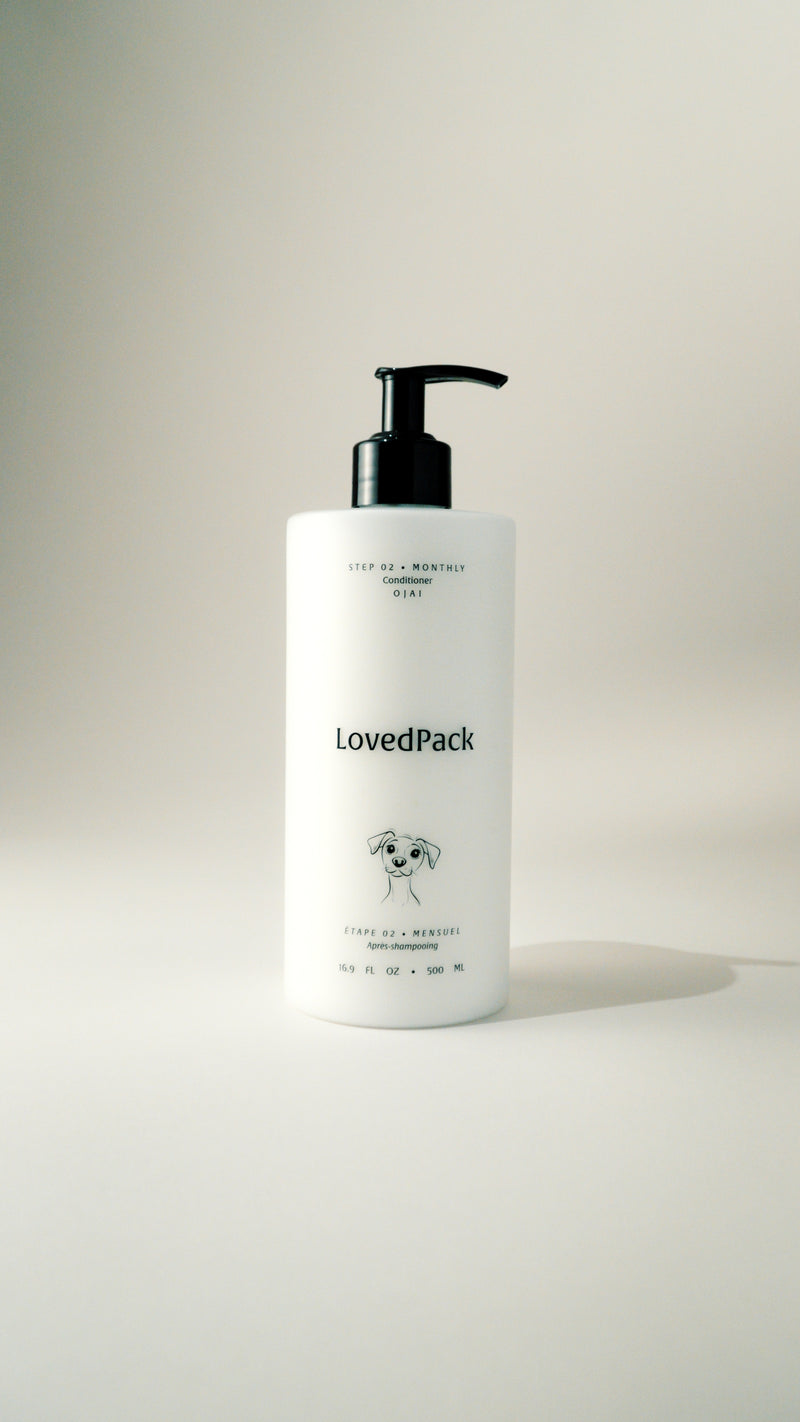
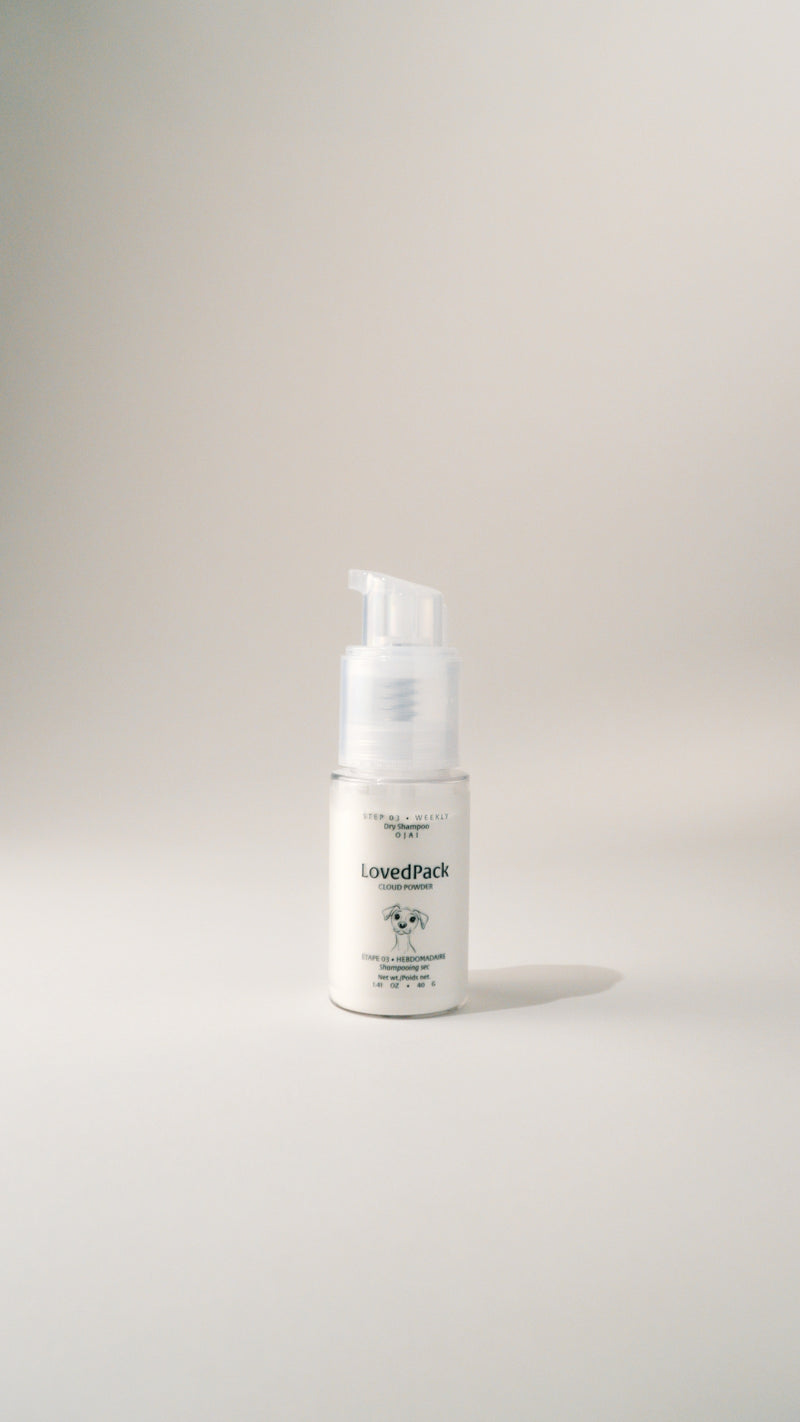
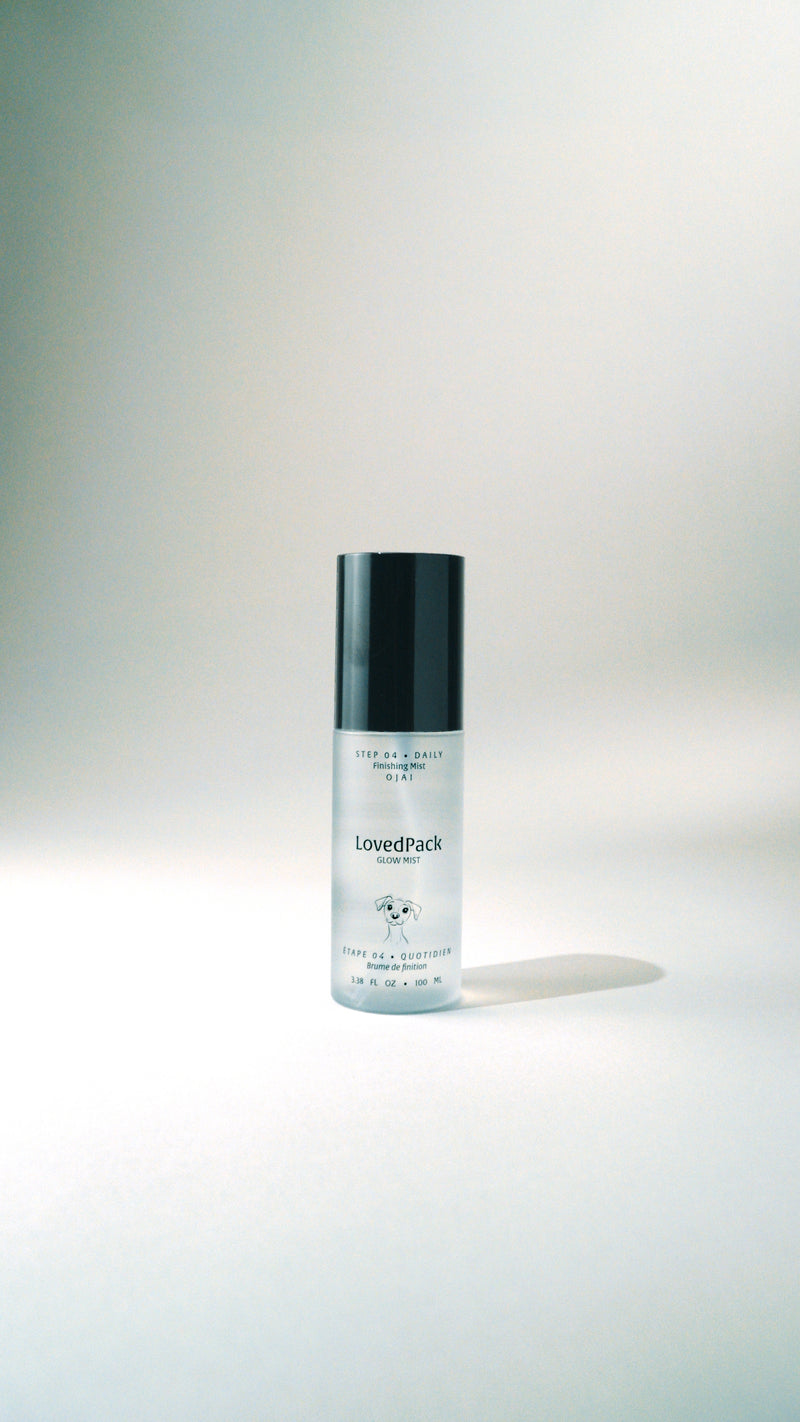
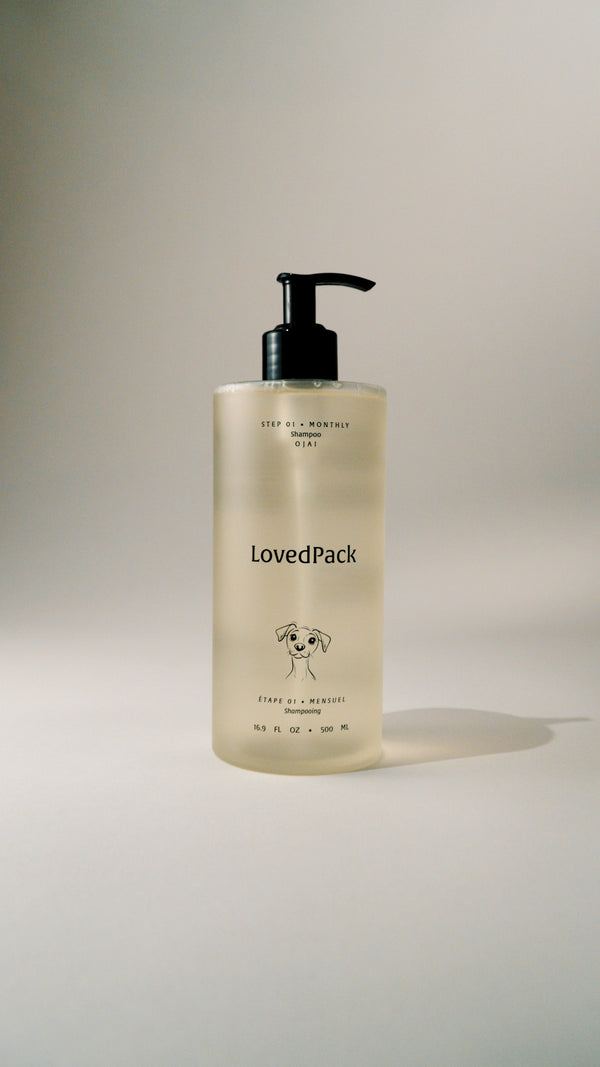
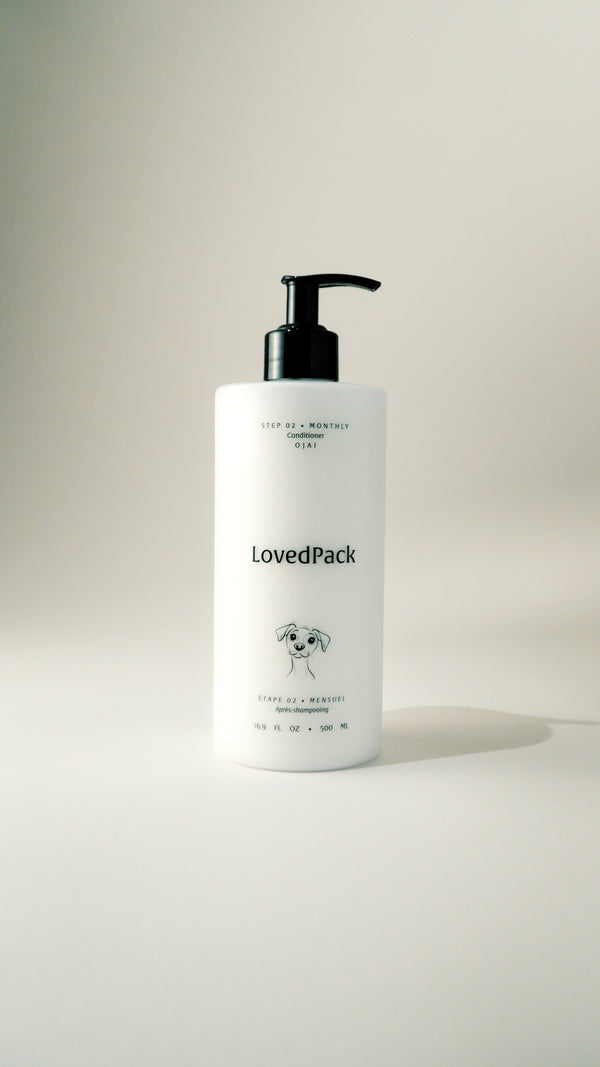
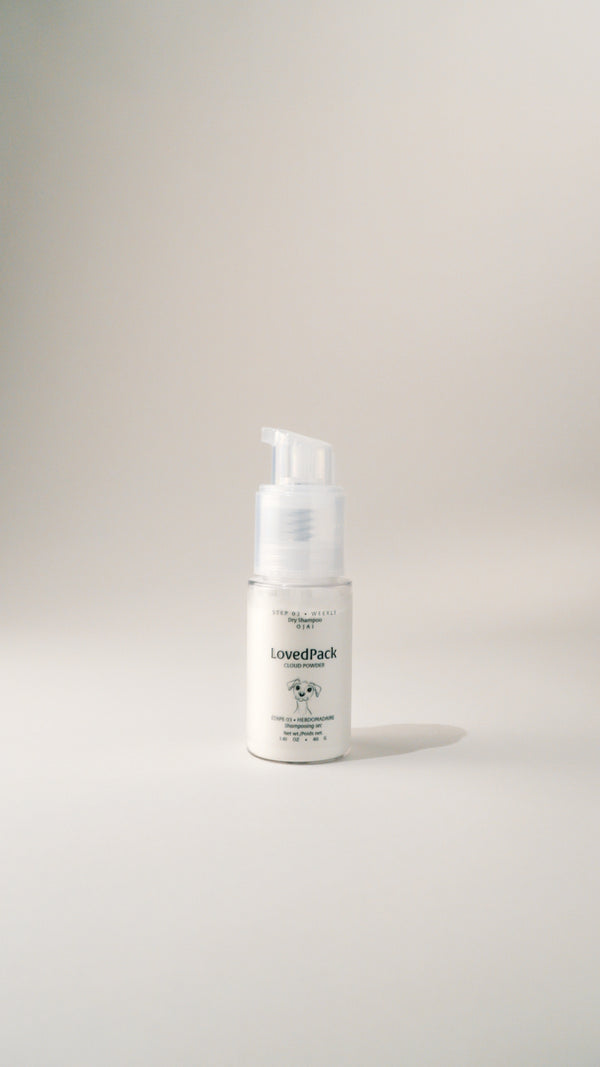
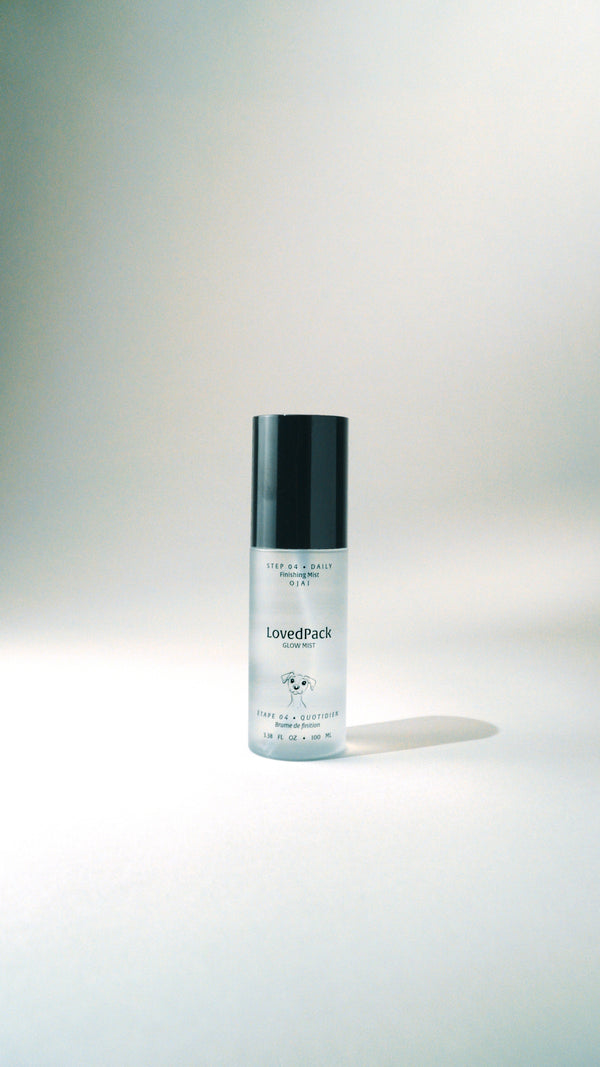
That matters to us because LovedPack was built around a simple rhythm. Wash and Soften monthly. Reset weekly. Glow daily.
We don't believe dog beauty means imposing an unnecessary human routine on a dog. We believe the dog should determine the care. Its skin, its coat, its biology, its actual life.
Beauty contributes something else. The discipline to distinguish one job from another. The clarity to explain when each belongs. The understanding that performance and sensory pleasure can coexist. The belief that an object used for care can also be worth living with. And the restraint to make a routine simpler rather than larger.
The dog needs the care. The human experiences the beauty.
Dogs moved closer. Their care is catching up.
Elbano Parilli + James Jarman
Founders, LovedPack
The Dog Beauty Index 2026 is original category research conducted and published by LovedPack. LovedPack products were intentionally excluded from the primary dataset. The Index doesn't rank brands or identify a category "winner." It's designed to examine how premium dog care is evolving across product roles, formats, frequency, routines and retail environments.