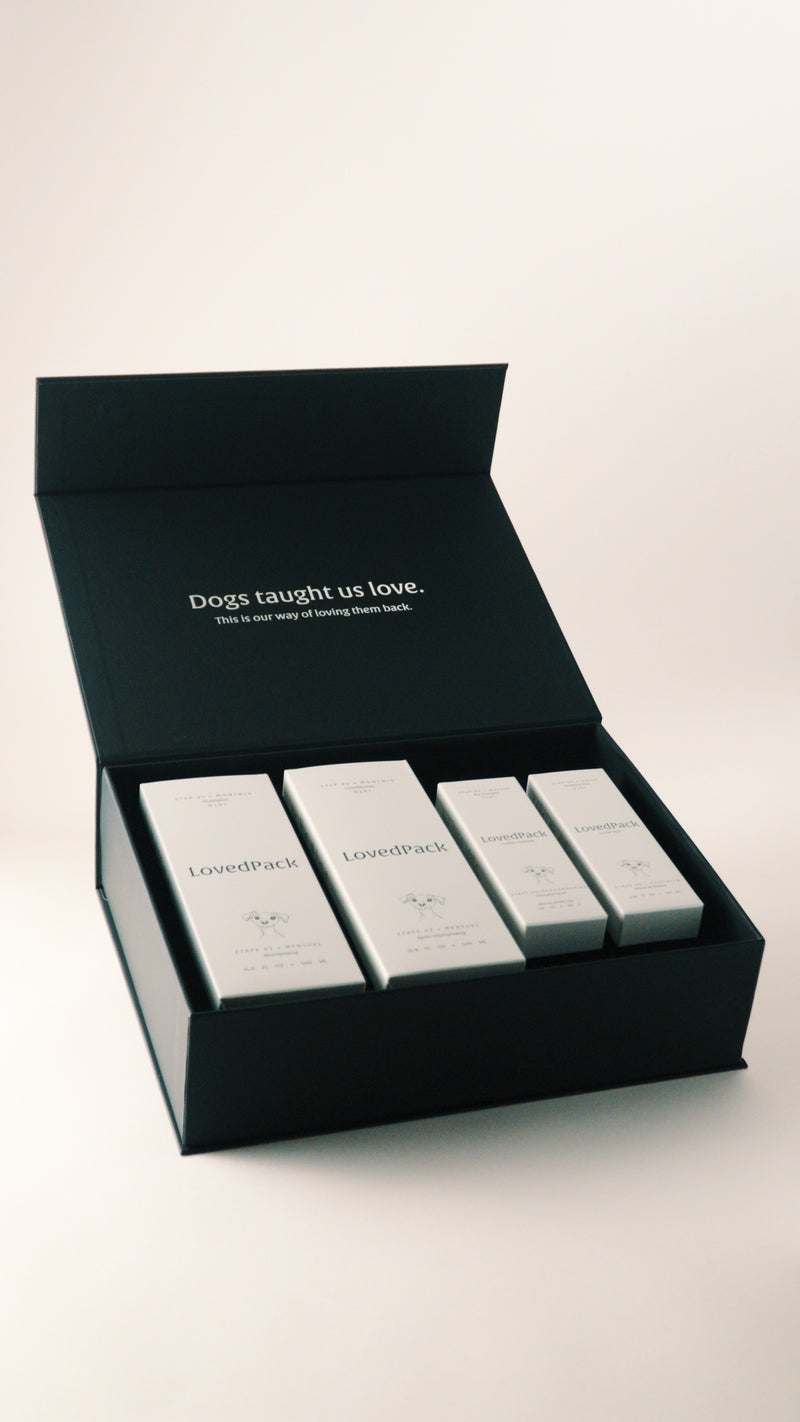





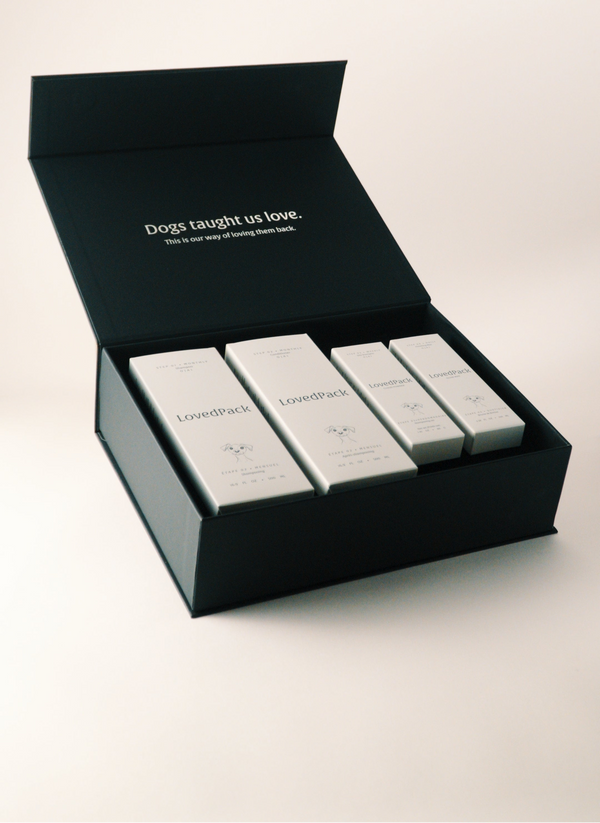

Dogs Taught
Us Love.
The interesting question is what we do with what they taught us.
There are things human beings have been trying to understand for thousands of years. How to love without possessing. How to care without being asked. How to remain open after being hurt. How to recognize a life before knowing its usefulness. How to belong to one another without first deciding who deserves to belong. Across religions, philosophies, rituals, prayers and poems, we have spent thousands of years trying to give language to these questions. And then there is a dog.
A dog does not ask for your résumé before walking toward you. It does not need to know what you own, what you achieved, whether anybody important knows your name, whether you are beautiful today, whether you are winning, whether you have become the person you promised yourself you would become. It notices something more immediate. Are you here? Can I come closer? Are we safe together?
Maybe that is why dogs have become so important to us. Not because they are uncomplicated creatures. They are not. They have fear, memory, preference, instinct, attachment, boundaries. But they often reveal something uncomplicated about connection. They connect before biography. Humans tend to do the opposite. We categorize before we approach. We learn names, titles, affiliations, value, usefulness. We decide what something is worth and then determine how much of ourselves we will give it. Dogs have a different order of operations. First presence. Then, perhaps, trust. Then relationship.
Long before LovedPack was a product, that contradiction interested us. People say they love dogs constantly. We believe them. But love becomes much more interesting when it stops being a declaration and becomes a behavior. Because love that exists only as a feeling asks very little of us. Love as behavior asks us to return, to notice, to care again tomorrow. To fill the water bowl when nobody is watching. To take the walk when it is inconvenient. To learn the body in front of us well enough to recognize when something has changed. To make room. To slow down. Small things. Repeated things.
This idea is not new. Human beings have approached it from many directions, and what is striking is how often they arrive at something similar. Christian traditions have spoken of agape. Jewish thought of chesed. Islam of rahmah. Buddhist traditions of metta and karuna. Sikh tradition of seva. Hindu, Jain and Buddhist traditions have explored ahimsa. Taoist thought has asked what it means to live in harmony without needing to dominate. These ideas are not interchangeable. They come from different histories, beliefs and practices. But they return, in different ways, to a question that interests us deeply: what happens when love stops being something we profess and becomes something we practice?
Perhaps this is why care matters so much. Care is love made observable. It is the moment an internal feeling acquires a body. A hand reaches down. A door is opened. A place is made. Something vulnerable is protected. Someone is remembered. A living being is cared for not because the world has declared it important, but because it is here.
That distinction matters. We live in a culture that is extremely good at assigning value. Beautiful things receive attention. Rare things receive protection. Successful people receive invitations. Beloved animals are given beds, medicine, birthday cakes and entire lives built around their comfort. We understand why. Attachment creates responsibility. But dogs can also ask us a harder question.
Does something have to belong to us before we believe it deserves care?
The dog sleeping in our bed and the dog nobody has chosen yet do not possess different capacities for fear, comfort, hunger or tenderness. One is inside our circle. The other is outside it. The difference is ours.
This is where love becomes bigger than affection. Affection says: I love this one. Love, practiced deeply enough, begins asking: what has this one taught me about how I should encounter the rest of the world? Maybe the lesson of loving a dog is not simply that dogs deserve our love. Maybe dogs are rehearsing something in us. Attention. Patience. Forgiveness. The willingness to be interrupted. The ability to find significance in repetition. The strange pleasure of caring for someone who will never understand your job title. The realization that being needed can sometimes bring us closer to the part of ourselves that feels most human.
And perhaps the most difficult lesson of all: presence is not a small thing.
Most of life is not made of revelations. It is made of Tuesday mornings and ordinary rooms and the same face across from you at breakfast. A dog is awake to all of it in a way we tend to forget. The morning walk matters not because it is exciting, but because it returns. The routine itself is the relationship. A life becomes a life through repetition, and love does too.
That may be why ritual has always mattered to human beings. We light candles. We wash. We gather. We kneel. We bow. We eat together. We repeat words our ancestors repeated before us. Not because repetition makes something less meaningful. Sometimes repetition is how meaning survives. A dog understands this instinctively. Morning means something because morning returns. Your presence matters because you come back. There is something almost radical about that constancy in a culture obsessed with novelty. Dogs do not seem particularly impressed by our obsession with becoming extraordinary. They are remarkably interested in whether we came home.
This is not an argument that ambition is meaningless. It is simply an invitation to remember that a life can become impressive while becoming increasingly difficult to inhabit. Dogs keep pulling us back toward inhabiting it. Here. Now. This room. This ordinary afternoon that will someday, without warning, become a memory.
Perhaps transcendence is not always about leaving ordinary life behind. Perhaps sometimes it means seeing ordinary life clearly enough to realize that it was never ordinary.
A head resting against your leg. An animal falling asleep beside you because, for now, your presence has made the world feel safe. A creature with a lifespan shorter than ours behaving as though this particular afternoon deserves its complete attention. There is something almost unbearably beautiful about that.
They cannot tell us how to solve humanity. They cannot explain God. They cannot tell us what happens after death, reconcile our religions, end our wars or answer the questions that have followed us since we first became conscious of being alive. But they can show us a way of being. Come closer. Notice. Return. Make room. Care again. Do not ask usefulness before offering kindness. Do not confuse status with worth. Do not wait for something to become extraordinary before deciding that it matters. And when love enters your life, do something with it.
Because perhaps this is one of the questions human beings keep returning to: what does love ask us to do? The world does not change because we understand love. It changes when love alters our behavior. Toward animals. Toward strangers. Toward people who cannot advance us. Toward lives that are not ours. Toward ourselves. In the small, repeated acts that almost nobody will ever see.
Dogs taught us love.
The interesting question is what we do with what they taught us.